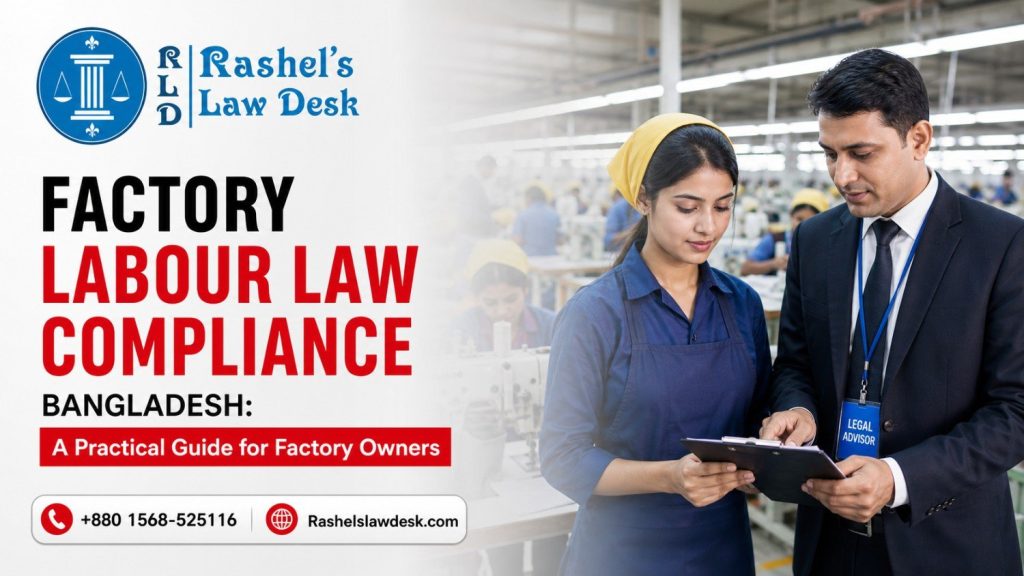
Factory Labour Law Compliance Bangladesh is essential for businesses operating manufacturing plants, factories, and industrial establishments. Compliance means ensuring that the factory follows applicable Bangladesh labour laws and regulations relating to employment, wages, working hours, leave, workplace safety, health, welfare, worker rights, and other statutory requirements.
The Bangladesh Labour Act, 2006, as amended, is a key legal framework governing employment, wages, occupational safety, worker welfare, industrial relations, and related matters in Bangladesh. The Department of Inspection for Factories and Establishments (DIFE) is responsible for important inspection and regulatory functions concerning factories and establishments.
What Is Factory Labour Law Compliance in Bangladesh?
Factory labour law compliance means maintaining the legal and operational standards required for a factory to employ workers and operate its workplace lawfully.
Depending on the factory and applicable requirements, compliance may cover:
- Employment and appointment documentation
- Worker records and registers
- Working hours and overtime
- Wages and statutory payments
- Leave and holidays
- Workplace health and safety
- Fire and emergency safety measures
- Worker welfare facilities
- Safety Committee requirements
- Child and adolescent worker restrictions
- Accident reporting and compensation
- Factory licence and related approvals
- Labour inspection and corrective actions
DIFE’s inspection functions include examining conditions of employment, wages, working schedules, leave, health, safety, hygiene and welfare, as well as factory licensing and certain building and machine-layout approvals.
Key Factory Labour Law Compliance Requirements
1. Employment and Worker Documentation
Factories should maintain proper employment records and documentation for their workers. Depending on the circumstances, this can include appointment letters, employee registers, service-related records, attendance records and other statutory documents.
Proper documentation helps employers demonstrate compliance and reduce disputes relating to employment terms.
2. Working Hours, Overtime and Leave
Factories must carefully manage working hours, weekly holidays, overtime and statutory leave requirements.
DIFE’s published guidance addresses working hours and weekly holidays, while its inspection mandate includes scheduling of work and leave.
3. Wages and Overtime Payments
Wage compliance is a major part of factory labour law compliance.
Employers should review:
- Applicable minimum wage requirements
- Regular wage payments
- Overtime payments
- Lawful deductions
- Wage and payroll records
- Outstanding statutory payments
DIFE identifies implementation of minimum wages as one of its responsibilities, and its inspection activities include payment of wages.
4. Workplace Health and Safety
A compliant factory should maintain appropriate occupational health and safety measures, including safe working conditions, machinery safety, emergency arrangements, sanitation, first-aid facilities and other applicable safety requirements.
DIFE’s inspection framework specifically covers occupational safety, health, hygiene and welfare.
5. Safety Committee and Worker Welfare
Where applicable, factories must address Safety Committee and worker welfare requirements. Safety Committees are part of Bangladesh’s factory safety framework, and DIFE has published inspection standards and procedures relating to workplace safety.
DIFE’s inspection framework specifically covers occupational safety, health, hygiene and welfare.
6. Child and Adolescent Worker Compliance
Factories must pay particular attention to restrictions concerning child and adolescent workers, including age verification and applicable working-hour and workplace restrictions.
DIFE’s labour compliance framework specifically addresses the elimination of child labour and protection of adolescent workers.
DIFE Factory Inspection and Compliance
The Department of Inspection for Factories and Establishments (DIFE) plays an important role in enforcing labour standards in factories and establishments.
During compliance-related activities, issues such as employment conditions, wages, working hours, leave, workplace safety, health, hygiene and welfare may be examined. DIFE also publishes inspection checklists and Standard Operating Procedures covering areas such as inspections, layout plans and accident investigation.
Factories should therefore maintain accurate records and address compliance gaps before they become regulatory or employment disputes.
Common Factory Labour Law Compliance Problems
Some common compliance risks include:
- Missing or incomplete employment records
- Incorrect overtime calculation
- Delayed or improper wage payments
- Incomplete leave and attendance records
- Inadequate workplace safety arrangements
- Failure to maintain required safety documentation
- Problems with factory licences or approvals
- Non-compliance with worker welfare requirements
- Failure to address inspection observations
- Improper handling of worker complaints or employment disputes
A periodic legal compliance review can help identify these risks before they result in penalties, disputes or operational problems.
How Rashels Law Desk Can Help with Factory Labour Law Compliance
Rashels Law Desk provides legal support to employers seeking to establish and maintain labour-law compliance in Bangladesh.
Our assistance may include:
- Factory labour law compliance review
- Labour compliance audit and gap identification
- Employment documentation review
- Employment contract and HR policy review
- Wage, overtime and leave compliance assessment
- Workplace labour-law advisory
- Assistance in preparing for labour inspections
- Review of factory compliance records
- Legal advice on worker complaints and disputes
- Guidance on corrective compliance measures
- Ongoing employer-side labour law support
For broader employer obligations and legal compliance requirements, see our guide on Employer Compliance with Bangladesh Labour Law.
Why Choose Rashels Law Desk?
Factory compliance is not simply about passing an inspection. The objective is to create a legally sound employment system that reduces disputes, protects workers’ rights and helps employers manage legal risks.
Rashels Law Desk can help factory owners and employers review their labour-law obligations, identify compliance gaps and take appropriate corrective measures based on the applicable legal requirements.
Frequently Asked Questions
It refers to complying with applicable Bangladesh labour laws and regulations governing factory employment, wages, working hours, leave, workplace safety, health, welfare and other employment-related requirements.
The Bangladesh Labour Act, 2006, together with applicable amendments, rules and other relevant legal requirements, forms a major part of the labour-law framework. The current DIFE laws portal also lists the Bangladesh Labour (Amendment) Act 2026.
Depending on the inspection and applicable requirements, DIFE may examine employment conditions, wages, working hours, leave, workplace safety, health, hygiene, welfare and other compliance matters.
Yes. Maintaining appropriate employment and worker records is an important part of demonstrating compliance with labour-law requirements.
Workplace safety is a core part of labour compliance. Factories may need to address machinery safety, emergency arrangements, occupational health, hygiene, welfare and other applicable safety requirements.
Yes. A labour lawyer can review employment documents, identify compliance gaps, advise on labour-law obligations, assist with inspection preparation and provide legal support for employment disputes and corrective compliance measures.
Get Legal Assistance for Factory Labour Law Compliance
If you operate a factory in Bangladesh, labour-law compliance should be treated as an ongoing legal responsibility—not a one-time inspection exercise.
Rashels Law Desk can assist employers with factory labour law compliance, documentation review, labour-law advisory and compliance risk management.
Contact Rashels Law Desk today to discuss your factory’s labour-law compliance requirements.