
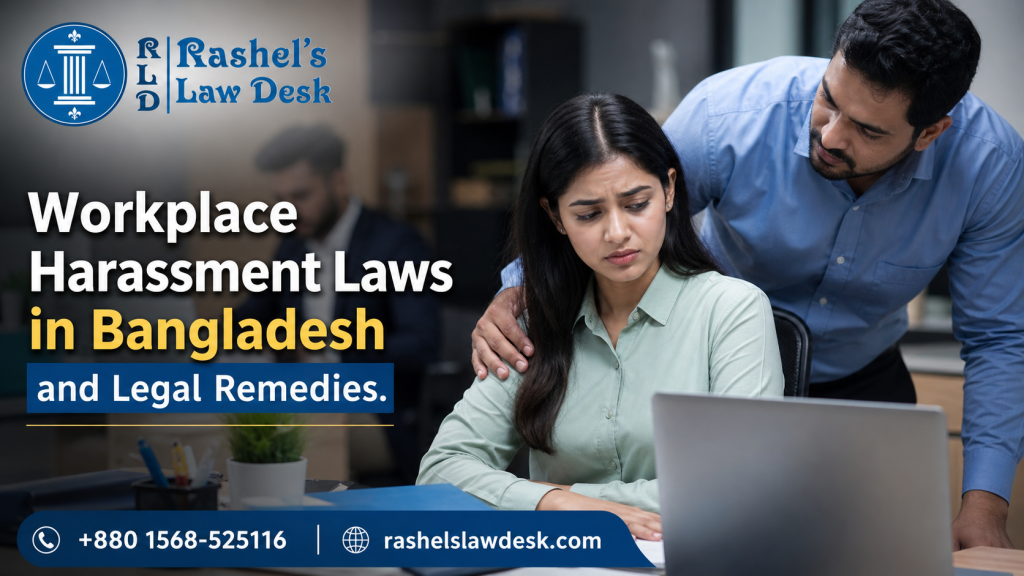
Workplace Harassment Laws in Bangladesh and Legal Remedies are essential for protecting employees from discrimination, abuse, intimidation, and misconduct at work. Employees have legal rights to a safe and respectful workplace, while employers have a responsibility to prevent harassment and maintain a healthy working environment. Understanding these laws and available legal remedies can help victims protect their rights and seek justice.
What is Workplace Harassment?
Workplace harassment refers to unwelcome conduct, behavior, or actions that create an intimidating, hostile, humiliating, or offensive work environment.
Common Types of Workplace Harassment
- Sexual harassment
- Verbal abuse and threats
- Workplace bullying
- Gender discrimination
- Psychological harassment
- Retaliation against employees
- Abuse of authority
- Intimidation and humiliation
Harassment may occur in government offices, private companies, educational institutions, NGOs, and other workplaces.
Workplace Harassment Laws in Bangladesh
Several legal frameworks protect employees against workplace harassment in Bangladesh.
Bangladesh Labour Act, 2006
The Bangladesh Labour Act provides legal protections relating to employee rights, workplace safety, fair treatment, and working conditions.
High Court Guidelines on Sexual Harassment
The High Court Division of the Supreme Court of Bangladesh issued guidelines in 2009 to prevent sexual harassment in workplaces and educational institutions until specific legislation is enacted. Employers are encouraged to establish complaint mechanisms and preventive measures.
Constitutional Protection
The Constitution of Bangladesh guarantees equality, dignity, and protection of fundamental rights.
Official legal resources:
What Constitutes Workplace Harassment?
The following behaviors may constitute workplace harassment:
- Unwanted physical contact
- Offensive remarks or jokes
- Threats and intimidation
- Repeated humiliation
- Discriminatory treatment
- Abuse of authority
- Retaliation after complaints
- Unfair treatment by supervisors
Causes of Workplace Harassment in Bangladesh
Several factors contribute to workplace harassment.
Lack of Workplace Policies
Many organizations lack clear anti-harassment policies and complaint procedures.
Abuse of Authority
Supervisors or managers may misuse their authority to intimidate employees.
Gender Discrimination
Unequal treatment based on gender remains a challenge in some workplaces.
Weak Complaint Mechanisms
Employees often hesitate to report incidents because of fear of retaliation, job loss, or workplace pressure.
Employer Responsibilities to Prevent Workplace Harassment
Employers have both legal and ethical responsibilities to maintain a safe workplace.
Implement Anti-Harassment Policies
Organizations should establish clear workplace policies prohibiting harassment.
Establish Complaint Committees
Employers should create internal complaint committees to investigate complaints fairly.
Conduct Fair Investigations
Investigations should be impartial, confidential, and conducted without bias.
Prevent Retaliation
Employees who report harassment should be protected from retaliation or discrimination.
Legal Remedies for Workplace Harassment in Bangladesh
Victims may seek various legal remedies depending on the facts and circumstances.
Internal Complaint Procedures
Employees may submit complaints to:
- Human Resources departments
- Internal complaint committees
- Management authorities
- Workplace investigation panels
Labour Law Remedies
Employment-related disputes may be addressed through applicable labour laws and workplace grievance procedures.
Civil and Criminal Proceedings
Serious incidents may result in civil claims or criminal proceedings where applicable. The availability of these remedies depends on the nature of the conduct and the applicable laws of Bangladesh.
Constitutional Remedies
Victims may seek judicial remedies where their fundamental rights have been violated.
How to Prove Workplace Harassment
Evidence is extremely important in workplace harassment cases.
Emails and Messages
Preserve emails, text messages, and digital communications.
Witness Statements
Statements from colleagues or other witnesses may support the complaint.
CCTV Footage
Security footage may provide valuable evidence.
Written Complaints
Keep copies of all complaints submitted to the employer.
Medical or Psychological Records
Professional records may help establish emotional or physical harm where relevant.
Steps to Take After Workplace Harassment
If you experience workplace harassment:
- Document every incident.
- Preserve all evidence.
- Report the matter internally.
- Identify potential witnesses.
- Seek legal advice.
- Consider legal action if necessary.
Timely action may significantly strengthen a legal claim.
Rights of Employees Under Bangladesh Law
Employees generally have the right to:
- Work in a safe environment
- Receive equal treatment
- Be free from discrimination
- File complaints without retaliation
- Seek legal remedies
- Protect their dignity and safety
When Should You Consult a Workplace Harassment Lawyer?
You should consider legal advice if:
- Harassment continues repeatedly.
- Your employer ignores complaints.
- You face retaliation.
- You experience unfair disciplinary action.
- You are wrongfully terminated.
- You need representation before legal authorities.
Early legal advice may help preserve evidence and protect your rights.
How Rashels Law Desk Helps
Rashels Law Desk provides legal assistance to employees facing workplace harassment and employment disputes.
Our Services Include
- Legal consultation and case evaluation
- Workplace harassment complaints
- Employment dispute resolution
- Legal notice drafting
- Representation before courts and authorities
- Employee rights guidance
- Strategic legal advice
Our legal team works diligently to protect the rights and interests of employees under applicable laws.
Frequently Asked Questions (FAQ)
Workplace harassment includes unwanted conduct, intimidation, discrimination, and behavior that creates a hostile work environment.
Yes. Depending on the circumstances, legal remedies may be available through internal procedures, labour laws, or judicial proceedings.
Emails, messages, witness statements, written complaints, and supporting documents may strengthen your case.
You should seek legal advice when harassment continues, complaints are ignored, or legal action becomes necessary.
Rashels Law Desk provides legal consultation, dispute resolution services, legal representation, and guidance for workplace harassment matters.
Conclusion
Understanding Workplace Harassment Laws in Bangladesh and Legal Remedies is essential for protecting employees and promoting safe workplaces. Employees who face harassment should act promptly, preserve evidence, understand their rights, and seek appropriate legal advice.
Contact Rashels Law Desk Today
If you are facing workplace harassment, discrimination, retaliation, or unfair treatment at work, consult Rashels Law Desk for professional legal guidance and case evaluation. Our legal team is committed to helping clients protect their workplace rights and pursue appropriate legal remedies under Bangladesh law.