Muslims, Hindus, Christians, and Buddhists in Bangladesh follow their own specific divorce laws and procedures, based on religious beliefs, customs, and teachings. Unlike non-religious matters, there is no common law for divorce.
If you are considering a divorce or want to stay informed, it is crucial to understand the correct procedures according to your religion. Failing to follow proper legal steps can affect both parties.
Our team of expert divorce lawyers in Bangladesh has prepared this comprehensive guide to help you navigate the divorce process in Bangladesh. Here, you will find step-by-step explanations for all religions to ensure fair and accurate outcomes.
Note that the divorce process in Bangladesh involves multiple steps and conditions. By following these guidelines carefully, you can give or take a divorce correctly and avoid future legal or personal complications.
Understanding Divorce Law in Bangladesh
Divorce laws vary depending on religion and civil law:
Muslim Family Law Ordinance 1961 – Talaq, Khula, Judicial Divorce.
Hindu Marriage and Divorce Act – Grounds include cruelty, desertion, adultery.
Christian Marriage and Divorce Rules – Only certain grounds like adultery, cruelty, or abandonment.
Family Courts Ordinance 1985 – Governs procedural rules in Family Courts.
Civil Marriage & Divorce Laws – For non-Muslims married under civil law.
Official reference: Bangladesh Government Law Portal
Muslim Divorce Laws and Procedures in Bangladesh
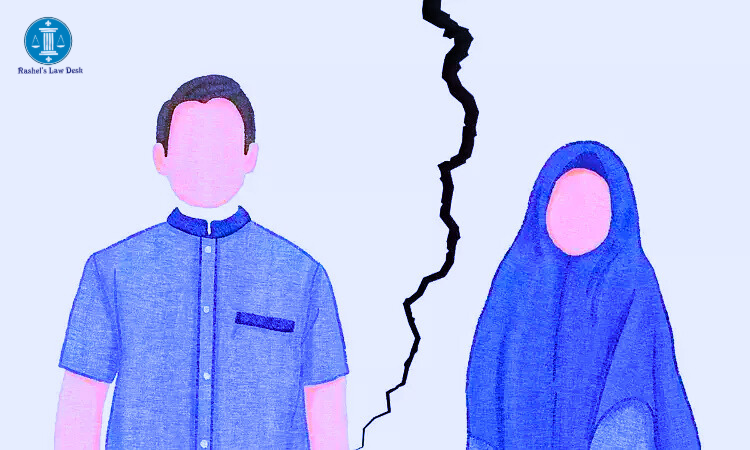
In Bangladesh, the divorce process for Muslims is governed by Islamic law, the Muslim Family Laws Ordinance of 1961, and the Family Courts Ordinance of 1985. Divorce for Muslims follows a structured procedure to ensure fairness for both parties. Both husbands and wives have the legal right to initiate a divorce, though the procedures differ depending on whether it is Talaq, Khula, or Mubarat.
Divorce Laws and Acts for Muslims in Bangladesh
Muslim divorce in Bangladesh is governed by several laws and acts to ensure a fair and structured process. The key legislations include:
Muslim Family Laws Ordinance, 1961 – Governs various aspects of family life for Muslims, including divorce. It establishes clear rules to streamline the divorce process and protect the rights of both husband and wife.
Family Courts Ordinance, 1985 – Establishes the Family Court system with jurisdiction over divorce, maintenance, and child custody cases. Provides legal procedures to resolve disputes fairly.
Dissolution of Muslim Marriages Act, 1939 – Empowers Muslim women to seek judicial divorce under specific grounds such as cruelty, abandonment, or failure to provide maintenance.
Muslim Marriages and Divorces (Registration) Act, 1974 – Allows all Muslim citizens of Bangladesh to apply for divorce and ensures official registration of marriage and divorce under Muslim law.
These laws collectively guide the divorce process in Bangladesh for Muslims, ensuring legal protection and clarity for all parties involved.
Types of Divorces for Muslims in Bangladesh
In Bangladesh, Muslim divorce is structured under Islamic law and the Muslim Family Laws Ordinance, 1961. There are three main types of divorce recognized under Muslim law:
1. Talaq (Husband-Initiated Divorce)
Talaq is a divorce pronounced by the husband according to Islamic principles.
The husband must declare Talaq in the presence of witnesses and follow the proper procedure to make it legally valid.
After Talaq, a waiting period (iddah) is observed to ensure the wife is not pregnant and to provide an opportunity for reconciliation.
The best divorce lawyer in Dhaka ensures the Talaq process complies with both Islamic law and the Family Courts Ordinance, 1985.
2. Khula (Wife-Initiated Divorce)
Khula allows the wife to initiate divorce through the Family Court.
The wife may have to return her dower (Mahr) or part of it, depending on the agreement with the husband.
A proper court petition and legal representation are required to finalize Khula.
Hiring the best divorce lawyer in Dhaka helps the wife navigate all legal requirements and protect her rights.
3. Mubarat (Mutual Consent Divorce)
Mubarat occurs when both husband and wife mutually agree to end the marriage.
This process is simpler and faster than Talaq or Khula but still requires documentation and legal formalities in Family Court.
The divorce process in Bangladesh under Mubarat ensures that both parties’ rights, including dower and property claims, are respected.
There are additional processes to consider, as each type of divorce in Bangladesh has specific conditions and legal steps outlined by Islamic law and the Family Courts Ordinance.
Divorce Procedure for Muslim Husbands in Bangladesh: Step-by-Step Guide
Muslim husbands in Bangladesh have the following legal steps to give a divorce, ensuring the process is fair and structured:
Pronouncement of Talaq: A Muslim husband can initiate divorce by pronouncing “Talaq” either orally or in writing. The Talaq must be clearly communicated to the wife.
Notification to Chairman or Union Parishad: Within seven days of pronouncing Talaq, the husband must send a written notice to the local Union Parishad (local government council). Failure to do so can invalidate the Talaq.
Arbitration Council Meeting: The Union Parishad forms an Arbitration Council within 30 days of receiving the notice. The council attempts reconciliation between husband and wife, which is mandatory before the divorce is finalized.
Waiting Period (Iddat): After Talaq, the wife observes an Iddat period, typically three months (three menstrual cycles). Reconciliation efforts can continue during this period.
Finality of Divorce: If no reconciliation occurs during Iddat, the divorce becomes final. The husband must provide the wife with her dower (Mehr) if it hasn’t been paid yet.
Divorce Procedure for Muslim Wives in Bangladesh
Muslim wives in Bangladesh have several legal options to obtain a divorce, ensuring their rights are protected under Islamic law and the Family Courts Ordinance:
Talaq-e-Tafweez (Delegated Divorce):
If the right to divorce was granted to the wife at the time of marriage, she can initiate divorce following the same process as the husband.
This includes notifying the Union Parishad and observing the Iddat period.
Judicial Divorce (Faskh):
If the wife does not have delegated Talaq rights, she can seek a judicial divorce through the Family Court.
Valid grounds include cruelty, failure to provide maintenance, or desertion.
Dissolution of Muslim Marriages Act, 1939:
Under this act, the wife can apply for dissolution of marriage with valid reasons such as harm, cruelty, absence of husband, or failure to perform marital duties.
Arbitration and Reconciliation:
The court may attempt reconciliation before finalizing the divorce.
If reconciliation fails, the court proceeds to grant the divorce.
Maintenance and Dower (Mehr):
After divorce, the wife is entitled to her dower and, in some cases, maintenance, depending on circumstances.
Both husband and wife should retain a copy of the divorce certificate. This document is crucial for future legal matters such as remarriage, disputes over maintenance, child custody, or property.
Important Rules for Muslim Divorce Registration in Bangladesh
Application Submission:
Upon receiving a request, the Nikah Registrar may record a divorce decreed under Muslim law, within his authority.
The person or parties who have completed the divorce must submit an oral or written application for registration.
Talaq-e-Tafweez Documentation:
If the husband delegated the right to divorce to the wife, the wife must present a registered document under The Registration Act, 1908, or an attested copy of the marriage register entry proving the delegation.
This ensures that the Talaq-e-Tafweez can be officially registered.
Appeal in Case of Denial:
If the Nikah Registrar declines to register the divorce, the applicant may appeal to the Registrar within 30 days of the denial.
Documents Needed for a Muslim Divorce Registration Process
Proper documentation is crucial to ensure that a Muslim divorce is legally valid and recognized in Bangladesh. The Nikah Registrar requires the following documents when registering a divorce:
Oral or Written Application:
The parties involved must submit an oral or written request to the Nikah Registrar for divorce registration.
Marriage Certificate / Nikah Registration Copy:
A copy of the original marriage certificate or Nikah registration is required to verify the marital relationship.
Delegation Document (For Talaq-e-Tafweez):
If the husband delegated the right of divorce to the wife, a document registered under The Registration Act, 1908, or an attested copy of the marriage register entry proving the delegation, must be presented.
Court Decree (if applicable):
If the divorce was granted through judicial means (Faskh or Family Court), a copy of the court decree must be submitted.
Identification Documents:
National ID cards of both husband and wife, or any government-issued identification, may be required for verification purposes.
Witness Details (if needed):
Some cases may require witness statements or verification, particularly for Talaq pronunciations.
Hindu Divorce Process and Legal Procedures in Bangladesh

Hindu marriage and family laws in Bangladesh are based on Hindu Dharma Shastra and specific Hindu family legislation. These laws differ significantly from those of other religions in the country. Traditionally, Hindu law does not recognize divorce, as Hinduism views marriage as a sacred and indissoluble union. However, Hindu law allows dissolution of marriage or legal separation under specific grounds. Understanding the correct divorce process in Bangladesh for Hindus is essential to ensure that all legal requirements are properly followed.
Important Points of Hindu Divorce Laws in Bangladesh
No Specific Legislation for Divorce:
Hindu personal law in Bangladesh traditionally does not provide provisions for divorce. Marriage is considered a sacred and permanent union that cannot be legally dissolved.
Separation and Abandonment:
When couples cannot continue living together, they may opt for informal separation or abandonment.
Such separation does not grant legal recognition, nor does it allow remarriage.
Inheritance and Property Issues:
Hindu women may face legal complications regarding property and inheritance after separation.
Maintenance, property disputes, and legal rights are limited, making professional legal guidance essential.
Hindu Divorce Laws and Regulations in Bangladesh
For Hindus in Bangladesh, there is no distinct law specifically governing Hindu divorce. Instead, the legal framework for the dissolution of marriage or separation follows traditional Hindu Dharma Shastra and related acts. Key laws and provisions include:
The Hindu Married Women’s Right to Separate Residence and Maintenance Act, 1946 – Grants Hindu women the right to live separately from their husbands under certain conditions and receive maintenance.
The Family Courts Ordinance, 1985 – Establishes Family Courts in Bangladesh, which handle disputes regarding separation, maintenance, and related family matters.
Hindu Marriage Registration Act, 2012 – Provides the legal framework for registration of Hindu marriages and documentation necessary for any legal proceedings, including separation.
Grounds for a Hindu Wife to Seek Divorce, Separate Residence, and Maintenance in Bangladesh
Adultery: If the husband is involved in extramarital relationships or commits adultery.
Desertion by the Husband: If the husband abandons his wife without consent or valid reason.
Cruelty: Includes physical, mental, or emotional abuse such as domestic violence, verbal abuse, or emotional torture.
Neglect or Refusal to Maintain: If the husband refuses or fails to financially maintain his wife, she can claim separate residence and maintenance.
Serious Illness: If the husband suffers from a serious illness that makes cohabitation unsafe or harmful.
Moral or Religious Grounds: If the husband forces the wife to act against her moral or religious principles.
Impotence or Inability to Fulfill Marital Obligations: If the husband is impotent or unable to fulfill marital duties.
Important Note: If a Hindu wife converts to another religion or ignores the court’s decision regarding her claim, she may not be eligible to receive separate residence or maintenance.
Step-by-Step Procedure for Hindu Divorce and Separation in Bangladesh
Hindu couples in Bangladesh may opt for informal separation or a court-sanctioned divorce depending on their situation. Below is a step-by-step guide:
Mutual Agreement or Informal Separation:
Couples may decide to live separately or agree upon mutual separation if the marriage becomes unsustainable.
This is socially or religiously accepted but does not constitute a legal divorce.
Seeking Relief under Civil Law (Special Marriage Act, 1872):
Couples who registered under this act can file a legal divorce petition in civil court on valid grounds.
Annulment of Marriage:
Either spouse may seek annulment under valid circumstances.
The court grants annulment only if convinced of the grounds.
Filing the Divorce Petition:
The aggrieved party files a petition in the relevant civil court, outlining grounds for divorce.
Necessary documents include the marriage certificate (if applicable) and supporting evidence such as testimonies of cruelty, desertion, or neglect.
Court Proceedings:
The court schedules hearings where both parties present arguments, evidence, and testimonies.
Negotiation and Reconciliation:
The court may attempt reconciliation between spouses.
If reconciliation fails, the court proceeds with the divorce process.
Judgment and Final Decree:
If the court finds the grounds valid and irreconcilable, it issues a decree for divorce or annulment.
Post-Divorce Considerations:
The court may address maintenance/alimony, custody of children, and related issues based on circumstances and financial standing of both parties.
Note: Dissolution of Hindu marriages is complex due to religious and social constraints. Most Hindu couples in Bangladesh resort to informal separation, often seeking guidance from community or religious elders.
Christian Divorce Laws and Procedures in Bangladesh

Christian marriage and divorce in Bangladesh are governed by the Christian Marriage Act, 1872, and related family laws. Unlike Hindu or Muslim marriages, Christian marriages have legal provisions for divorce under specific circumstances. Understanding these laws is essential to ensure a smooth divorce process in Bangladesh for Christian couples.
Christian Divorce Laws and Regulations in Bangladesh
In Bangladesh, Christian marriages and divorces are governed primarily by the Christian Marriage Act, 1872. Key points include:
Grounds for Divorce: Either spouse can seek divorce based on adultery, desertion, cruelty, or other legally valid reasons.
Court Jurisdiction: Divorce petitions must be filed in civil courts, which handle Christian family disputes.
Legal Procedure: The court may encourage reconciliation, conduct hearings, and issue a final decree if grounds are proven.
Post-Divorce Matters: Maintenance, alimony, and child custody are addressed as part of the court’s decree.
Legal Grounds for Christian Divorce in Bangladesh
Christian divorce in Bangladesh is permitted only on grounds explicitly outlined in the Divorce Act of 1869. The major legal grounds include:
Adultery: If a spouse engages in extramarital relationships or commits adultery, the other spouse can file for divorce.
Conversion to Another Religion: If one spouse renounces Christianity and converts to another religion, the other spouse may seek divorce.
Cruelty: Physical or emotional abuse making married life unbearable can be valid grounds for divorce.
Desertion: If one spouse deserts the other for at least two continuous years without reasonable cause, the deserted spouse may file for divorce.
Infidelity or Bigamy: If a spouse enters into another marriage while still legally married, the other spouse can petition for divorce.
Step-by-Step Procedure for Christian Divorce in Bangladesh
Christians in Bangladesh can choose one of the 3 procedures offered under the Divorce Act of 1869:
- Dissolution of Marriage
- Nullity of Marriage
- Judicial Separation
The divorce process for Christians in Bangladesh includes certain legal steps in any of the above-mentioned procedures as prescribed by the Divorce Act of 1869. Each step ensures that the divorce is legally right and fair to both parties. Below is the step-by-step procedure for the dissolution of marriage for Christian couples in Bangladesh.
- File a Petition: The spouse seeking divorce must file a petition with the Family Court. This petition must specify the grounds for divorce, such as adultery, desertion, or cruelty. It is crucial to present all necessary evidence to support the claims.
- Service of Notice: After the petition is filed, the court serves a notice to the other spouse, informing them of the divorce proceedings. This ensures that both parties have an equal opportunity to participate in the process.
- Mediation and Reconciliation: Before proceeding with the divorce, the court may suggest mediation or reconciliation between the spouses. This step is particularly important in Christian marriages, where reconciliation is often encouraged.
- Trial: If reconciliation efforts fail, the court schedules a trial where both parties present their arguments and evidence. Witnesses may also be called to testify. The trial aims to determine the validity of the divorce petition.
- Decree Nisi: If the court finds the grounds for divorce valid, it issues a Decree Nisi, a provisional order that declares the marriage dissolved. However, this decree is not final, and both parties have the opportunity to appeal the decision.
- Decree Absolute: After six months, if no appeal is filed, the court issues a Decree Absolute, which finalizes the divorce. The couple is now legally separated.
- Custody and Maintenance: The court may also decide on issues like child custody, maintenance, and alimony. Christian divorce law in Bangladesh aims to ensure that the welfare of children is prioritized, and the financial well-being of both parties is secured.
Key Considerations for Christian Divorce in Bangladesh
Christian couples in Bangladesh should keep the following important points in mind while navigating the divorce process in Bangladesh:
Legal Grounds Must Be Proven:
Divorce is only granted under grounds recognized by the Divorce Act of 1869, such as adultery, cruelty, desertion, conversion, or bigamy.
Court Proceedings Are Mandatory:
All Christian divorces must go through civil courts. Informal separation or religious mediation alone is not legally recognized.
Documentation Is Crucial:
Marriage certificate, proof of adultery, desertion, or cruelty, and any other relevant evidence must be submitted to support the petition.
Reconciliation Attempts:
Courts may encourage reconciliation or mediation between spouses before granting a divorce decree.
Post-Divorce Matters:
Maintenance, alimony, child custody, and property matters are decided by the court and must be clearly requested in the petition.
Legal Advice Recommended:
Professional guidance from experienced lawyers ensures compliance with legal procedures and reduces risks of delays or rejection.
Conclusion
Divorce laws in Bangladesh differ significantly across religions—Muslim, Hindu, Christian, Buddhist, and individuals with no religious affiliation. Each system has unique rules for grounds, procedures, documentation, notice periods, and court involvement. Missteps can easily create delays, legal disputes, or long-term complications.
To protect your rights and ensure a fair outcome, you must follow the divorce procedure that applies specifically to your religion. Whether it involves Talaq, Khula, Mutual Consent, Judicial Separation, or Court-sanctioned dissolution, expert guidance is essential.
If you are planning a divorce or already facing a family dispute, it’s critical to consult a skilled family and divorce lawyer in Bangladesh. For professional legal assistance, you can visit Rashel’s Law Desk, where experienced lawyers provide full support for divorce, maintenance, custody, and related family matters.
FAQs About Divorce in Bangladesh
Divorce procedures differ by religion. Muslims follow the Muslim Family Laws Ordinance, Hindus follow Dharma Shastra and related acts, Christians follow the Divorce Act, 1869, and civil marriages under the Special Marriage Act have separate rules.
Muslim: Talaq, Khula, cruelty, abandonment
Hindu: Separation, cruelty, desertion (informal or civil under Special Marriage Act)
Christian: Adultery, cruelty, desertion (2+ years), conversion, bigamy
Civil: Mutual consent, adultery, cruelty, desertion
Yes. Muslim, Christian, and civil marriage laws allow wives to claim maintenance based on financial circumstances. Hindu wives may claim separate residence and maintenance under the 1946 Act.
Muslim divorce (Talaq): typically 3 months (Iddat period + arbitration)
Court-based divorces (Christian, Hindu civil, Special Marriage Act): 6 months to several years depending on evidence and court backlog.
Yes. Professional legal guidance ensures the correct procedure is followed, documents are prepared, and rights (custody, maintenance, property) are protected. Start with the Best Divorce Lawyer in Dhaka for expert support.
Call to Action
Divorce is a complex legal process, but you don’t have to face it alone. Protect your rights and complete the procedure correctly. Contact the best divorce lawyer in Dhaka at Rashel’s Law Desk today for expert guidance and smooth, legally sound divorce proceedings.
Contact now for a fast and professional solution.